Saturday, July 25, 2009

Make a salad!


Mark Bittman, a non-vegan, offered 101 salads in a recent New York Times article. He started the list with the vegan salads. I copy them here for ease, and note that the original article can be found at the NYT website. I have removed what I consider gratuitous comments on non-vegan additions that Mark made. If you try some, let us know how you like them!

For fat-watchers (and yes, I'm one of them), I have starred those that call for no oil. Of course, many of the salads that call for a vinaigrette can be made with one that is fat-free.

MOSTLY VEGAN SALADS

1. Cube watermelon and combine with tomato chunks, basil and basic vinaigrette. You can substitute peach for the watermelon or the tomato (but not both, O.K.?).

2. Mix wedges of tomatoes and peaches, add slivers of red onion, a few red-pepper flakes and cilantro. Dress with olive oil and lime or lemon juice. Astonishing.

* 3. A nice cucumber salad: Slice cucumbers thin (if they’re fat and old, peel and seed them first), toss with red onions and salt, then let sit for 20 to 60 minutes. Rinse, dry, dress with cider vinegar mixed with Dijon mustard; no oil necessary.

4. Shave raw asparagus stalks with a vegetable peeler. Discard the tough first pass of the peeler — i.e., the peel — but do use the tips, whole. Dress with lemon vinaigrette and coarse salt.

5. Grate or very thinly slice Jerusalem artichokes; mix with pitted and chopped oil-cured olives, olive oil, lemon juice and a sprinkling of coarsely ground cumin. Unusual and wonderful.

6. Sichuan slaw: Toss bean sprouts, shredded carrots and celery, minced fresh chili, soy sauce, sesame oil and a bit of sugar. Top with chopped peanuts and chopped basil, mint and/or cilantro. (The full trio is best.)

7. Grate carrots, toast some sunflower seeds, and toss with blueberries, olive oil, lemon juice and plenty of black pepper. Sweet, sour, crunchy, soft.

* 8. Chop or slice radishes (or jicama, or the ever-surprising kohlrabi) and combine with chopped or sliced unripe (i.e., still crunchy) mango, lime juice and mint or cilantro.

* 9. Chop or slice jicama (or radishes or kohlrabi) and mango and mix with coconut milk, lime juice, curry powder and cilantro or mint.

10. Cook whole grape tomatoes in olive oil over high heat until they brown lightly, sprinkling with curry powder. Cool a bit, then toss with chopped arugula, loads of chopped mint and lime juice.

11. Chop and steam baby or grown-up bok choy until crisp-tender, then shock it in ice water. Drain, then toss with halved cherry tomatoes, capers, olive oil and lemon juice.

12. Combine sliced fennel and prune plums; serve with vinaigrette spiked with minced ginger. Nice pairing.

* 13. A red salad: Combine tomato wedges with halved strawberries, basil leaves, shaved vegan Parmesan and balsamic vinegar.

14. A classic Moroccan thing: Thinly slice carrots, or grate or shred them (the food processor makes quick work of this). Toss with toasted cumin seeds, olive oil, lemon juice and cilantro. Raisins are good in here, too. There is no better use of raw carrots.

15. Cut cherry or grape tomatoes in half; toss with soy sauce, a bit of dark sesame oil and basil or cilantro. I love this — the tomato juice-soy thing is incredible.

16. Slice fennel and crisp apple about the same thickness (your choice). Combine, then dress with mustardy vinaigrette and chopped parsley. Come fall, this will be even better.

17. With thanks to Szechuan Gourmet restaurant: Finely chop celery and mix with a roughly equal amount of pressed or smoked tofu, chopped. Dress with peanut oil warmed with chili flakes and Sichuan peppercorns, then mixed with soy sauce.

18. Roughly chop cooked or canned chickpeas (you can pulse them, carefully, in a food processor) and toss with olive oil, lemon juice, lots of chopped fresh parsley and mint, and a few chopped tomatoes. Call this chickpea tabbouleh.

19. Mix cooked cannellini or other white beans, chopped cherry or grape tomatoes and arugula or baby spinach. Lightly toast sliced garlic in olive oil with rosemary and red pepper flakes; cool slightly, add lemon zest or juice or both, then pour over beans.

20. Shred Napa cabbage and radishes. The dressing is roasted peanuts, lime juice, peanut or other oil, cilantro and fresh or dried chili, all whizzed in a blender. Deliciousness belies ease.

* 21. Dice cucumbers (if they’re fat and old, peel and seed them first) and toss with cubes of avocado, a little mirin, rice vinegar and soy sauce.

22. Thinly slice button mushrooms; toss with finely chopped carrots and celery and mix with mung bean sprouts. Finish with peanut or olive oil, sherry vinegar, a little soy sauce and minced ginger. (This is a super vinaigrette, by the way.)

* 23. Thinly slice some cucumbers (if they’re fat and old, peel and seed them first), red onions, radishes and fresh chili pepper. Soak for a few minutes in equal amounts vinegar and water, with some salt and sugar. When they taste lightly pickled, drain and serve, alone or over rice.

24. Blanch spinach, then drain and shock in ice water. Squeeze it dry, chop it and toss it with toasted pine nuts, raisins, olive oil and a tiny bit of balsamic vinegar. Capers are good, too. Quite elegant, actually.

* 25. Combine chopped bell peppers, tomatoes, red onion, chilies and cilantro, then toss with corn tortilla strips, toasted in a 350-degree oven until crisp (or yes, use packaged chips; why not?). Dust with chili powder and lots of lime juice.

26. Combine mushroom caps and thinly sliced red onions with olive oil; broil gently until tender and browned. Toss with a lot of chopped fresh parsley or basil (or both) and a simple vinaigrette. Some chopped escarole, arugula or watercress is good, too.

27. Cook whole, unpeeled eggplant in a dry, hot skillet or on a grill, turning occasionally, until completely collapsed and soft. Chop and toss with toasted pita, toasted pine nuts, cooked white beans and halved cherry tomatoes. Dress with olive oil, lemon juice and lots of black pepper. Or a vegan yogurt dressing is good, especially one laced with tahini.

28. Toss mâche or another soft green with toasted slivered almonds and roughly chopped fresh figs. Thin some almond butter with water and sherry vinegar to taste and use as a dressing.

29. Pit and halve cherries (or halve and pit cherries), then cook gently with olive oil and a little balsamic vinegar until they break down. Toss with chopped radicchio, endive, escarole or a combination, some toasted hazelnuts and more oil and vinegar, if necessary.

30. Fast, grown-up potato salad: Boil bite-size red potatoes. While still warm, dress them with olive oil, lemon juice, whole grain mustard, capers and parsley. Chopped shallots, bell peppers, etc., all welcome, too.

31. Roast beets whole (or buy them precooked), then slice or cube and toss with a little chopped garlic (or a lot of roasted garlic), toasted walnuts, orange juice and olive oil.

32. Same deal with the beets, but toss with cooked corn, arugula, olive oil, sherry vinegar and chopped shallots.

33. The real five-bean: Chickpeas, cannellini or other white beans, kidney or other red beans, steamed string beans and steamed yellow wax beans. Toss with vinaigrette, chopped scallions or red onion, and parsley.

34. Grill quartered romaine hearts, radicchio and/or endive. Drizzle with olive oil and sherry vinegar, and add dill and chopped shallots. Teeny-tiny croutons are great on this.

35. Combine cooked or canned black beans with shredded cabbage and this vinaigrette: olive oil, fresh orange juice, not much sherry vinegar, ground cumin.

36. Mix cooked or canned chickpeas with toasted coconut, shredded carrots, chopped celery, curry powder, olive oil, lime juice and cilantro.

----

Placing the vegan salads first gives them a role of importance in this article. A few years ago we would not have seen that.

Friday, July 24, 2009

Viva la soul! Review of Vegan Soul Kitchen

soulkitchen

Bryant Terry's new cookbook, Vegan Soul Kitchen, takes "soul" seriously. Instead of focusing on traditional soul foods and simply replacing the animal products, Terry tries to define what the soul in soul food really represents. It's as much a book about a culture as it is about food. But that doesn't mean it is filled with dense gray pages of type. It also doesn't mean Terry is preaching or trying to convert anyone.

Why do I mention this book in this blog? Because many of these recipes are absurdly easy to make, and the others, while they may require a few pots and bowls and a little time, go together easily. Also because the cookbook includes directions for making several home-made condiments, which can enhance your convenience food!

Baked sweet potato fries

When I first opened this book I was confused. The book is not divided in the usual sections: appetizers, main dishes, side dishes, dessert, breads, blah blah blah. Instead it is divided into sections that are important to those southerners who swear by soul food. That means we get a whole chapter on watermelon. And drinks. And condiments. Along with the expected (but differently categorized) chapters on vegetable side dishes, grain dishes, protein dishes, desserts and other sweet things.

The whole of it adds up to a focus on the lighter parts of the meal. It's a great book for parties, right out of the box. It's also a good book for home-made staples. You can create a light corn broth, a zinging cajun-creole seasoning mix, pickles and ketchup and salsa and chutney and more. Terry is also interested in keeping his meals healthy, so you'll find little emphasis on fat and lots of emphasis on fresh.

cajun-creole spice mix

In other words, this book is more for the edges than the center. You will find red beans and rice and you will find "not-so-dirty rice" and hoppin' john, yes. There are many main dish recipes. But the bulk of the book is in the seasoning, the introduction, the end of the meal. Not to mention the melody.

Every recipe is prefaced by the name and performers of a piece of recorded music. The cookbook itself begins with the score for "Blessing" by Donald Bryant. After the song we are usually treated to a little bit about the food, where it's from, memories, some hint of how it came to be.

Some nuts and bolts:

* Every recipe starts on a new page, at the top.

* There is a section on equipment at the beginning.

* There are color photos sprinkled through it.

* Although some of the recipes take several steps, none require the skill of a kitchen magician. You can make these.


corn broth on its way to becoming succotash soup

I tested several recipes and enjoyed them all. When I made Succotash Soup with Garlicky Croutons I told my daughters that this one recipe was worth the price of the book. I am now using the cajun-creole spice mix that I created from the chapter on condiments, and I know I don't have to settle for anything commercial again.

straining the succotash soup. easier than I thought.

File under "entertainment", "basics", "staples", and "VEGAN".

crossposted at Vegan Soapbox

Tuesday, June 23, 2009

Simple steamed veggies


The other day my meal was just this simple: steamed vegetables (right) and salad (left). I believe when there are many colors you've got it covered.

Sunday, June 21, 2009

Testing, testing...

I am trying out some recipes in a new cookbook: Vegan Soul Kitchen, by Bryant Terry. Today I tried the Succotash Soup, with Garlicky Cornbread Croutons. It's not a quick dish. I figure you should allow yourself two hours to be safe. It's a good recipe for those who are practicing their sidework skills (it's good to keep cleaning up after yourself as you go along, especially when there are several pans and bowls involved). It isn't a complex recipe and the ingredients are few, but there are enough steps that I felt very proud when I finished it.

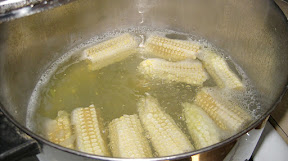
The recipe calls for four fresh corn cobs, from which I cut off the corn and then cut the cobs in three parts. It also calls for 2 cups of lima beans, cooked in 10 cups of water until tender. When the beans are done, they are strained out of the broth and the cobs are then added to the bean broth. Thus:


While the cobs are cooking in the broth, giving up their flavor, diced onions (from one large onion) are sauteed until soft. In the cookbook they are sauteed in olive oil, but I used water.


Meanwhile the beans wait:


And the fresh corn waits:


The corn is added to the soft onions (1/3 c. of corn is reserved for later), and the mixture is cooked about five minutes longer, until corn is done:


When the broth is ready (it cooks 30 minutes), the corn cobs are removed and added to the compost pile if you have one (I don't, yet), and the corn and onion mix is added to the broth.


After it is cooked sufficiently (about ten minutes), it is blended in a blender and then strained through a sieve to get rid of the tough corn skins.


The sieving is easier than I expected. There was a bit less than a cup of fiber left in the sieve when I called it good.

The recipe calls for a topping of corn bread croutons that are toasted with a garlic-oil mixture as well as freshly roasted corn (done in the broiler). I actually prepared and served these parts, along with the chopped flat-leaf parsley.

The result:


It is so delicious! This recipe makes me want to make more from this cookbook. But honestly, it's the kind of recipe that I consider worth the price of the book.

Note: I tagged this post "McDougall" because with the water instead of oil the soup itself is cooked according to McDougall recommendations. The croutons and roasted corn were not.

A Corny Meal


Polenta with mushrooms and asparagus in marinara sauce

Easy meal to make, satisfying, flexible. Two methods:

Method one: the "hard" way:

For four servings:
Polenta:
1 c. polenta meal
4 c. water
1 tsp. salt

Make the polenta: Mix polenta in water, in a two-quart baking dish. Add salt, stir. Bake for fifty minutes at 350 degrees. Take out, stir, then replace in the oven for 10 - 20 minutes, until done. It will be thick and soft.

Corn and vegetable sauce:
4 ears corn
1/2 c. water
1/2 medium onion, chopped
4 oz. mushrooms, sliced
4 oz. asparagus, fresh, preferably thin
1 - 2 c. marinara sauce
A few leaves of fresh basil, chiffonade (roll up and slice thinly) (optional)
Italian seasoning to taste

While the polenta is cooking, prepare the vegatables. Take the husks off the corn and cut in half. Clean and slice mushrooms. Wash asparagus, cut off tough ends and discard, then cut spears into 1 - 2" long pieces. Chop onion. Slice basil leaves into thin strips.

Put a large pot of water on to boil. When the polenta is back in the oven for the second time, put the corn in the pan to cook until done. Test by spearing an ear - if liquid that comes out of a kernal is clear the corn is done.

When polenta is about 2/3 (about 40 minutes in) done, fix sauce. In a large frying pan heat water over medium heat. Add onion, cook for about a minute. Add mushrooms and steam-cook until nearly done (5 - 10 minutes). Add asparagus, marinara sauce, and seasoning. Cook until asparagus is crisp-tender.

[Alternatively, you can cook the polenta ahead and refrigerate. Cut into four pieces and reheat in the microwave]

To serve: Divide polenta onto the four plates. Divide sauce on top of the polenta. Serve corn on the side.

Method two: The easier way:

Polenta: Use tube from the store. For each serving cut two slices, each about 1/2" thick. Heat in microwave until warm.

Corn: use frozen ears. Cook four in microwave, according to package directions.

Sauce. Combine all ingredients except asparagus in wide microwave-safe dish with lid. Cook in microwave oven until nearly done (microwaves vary; start with three minutes and check). Add asparagus (you can use frozen spears if you like, or frozen cut asparagus) and cook until crisp-tender, another minute or so.

Assemble.

Warning: I did not try the microwave version. I relied on past experience with similar mixtures and with polenta from a tube package. If you try it let me know how it comes out.

Saturday, June 13, 2009

What is convenience?

Today I attended a Pampered Chef party at the clubhouse in my mobile home park. Yes, I admit it. I'm trailer trash. But vegan trailer trash.

I joined seven others from the park. The consultant (also from the park) had laid out her equipment on some tables in front and was demonstrating how to make some artichoke tarts.

Now, years ago I attended the only other Pampered Chef party I have been to. I didn't know anything about the company then but thought perhaps the equipment was for people who really like to cook, and maybe it would be great equipment. I soon discovered that instead it is all about "convenience". The recipes and equipment are all intended to make cooking as easy and fast as possible. Our host - consultant demonstrated how easy it was to make these tarts, using about seventeen pieces of equipment.

Yes. The list of equipment was longer than the list of ingredients. Among the items she used:

* a garlic press
* a food chopper
* a wooden thing to press dough into a cupcake pan
* a large measuring cup/bowl
* a pizza wheel (I kid you not: she chopped parsley with it)
* cupcake pan
* a melon baller
* a cherry pitter
* and more

I have some specialized equipment myself. I have a mandolin, a salad spinner, a rice cooker, a crock pot. Most of the time, though, I rely on two knives - a chef's knife and a paring knife - plus a cutting board, and some pans for cooking. It doesn't take much to be a vegan chef. And I suspect that I could have put together the same recipe (relying on vegan cheese, of course, instead of what she used) in the same or less time with a lot less equipment.

The trick is knowing how to use your equipment. Learn how to use and care for two decent knives and you are well ahead. You will also have a lot less to clean up.

Sunday, June 7, 2009

PETA's Vegan College Cookbook


Check out PETA's Vegan College Cookbook
at peta2.com
.

I just took a look at PETA's Vegan College Cookbook at the bookstore. I was surprised at how simple the recipes are. It's full of really convenient vegan recipes. They are super-easy.

And none of the recipes require a stove!