Showing posts with label salad. Show all posts

Saturday, July 25, 2009

Make a salad!


Mark Bittman, a non-vegan, offered 101 salads in a recent New York Times article. He started the list with the vegan salads. I copy them here for ease, and note that the original article can be found at the NYT website. I have removed what I consider gratuitous comments on non-vegan additions that Mark made. If you try some, let us know how you like them!

For fat-watchers (and yes, I'm one of them), I have starred those that call for no oil. Of course, many of the salads that call for a vinaigrette can be made with one that is fat-free.

MOSTLY VEGAN SALADS

1. Cube watermelon and combine with tomato chunks, basil and basic vinaigrette. You can substitute peach for the watermelon or the tomato (but not both, O.K.?).

2. Mix wedges of tomatoes and peaches, add slivers of red onion, a few red-pepper flakes and cilantro. Dress with olive oil and lime or lemon juice. Astonishing.

* 3. A nice cucumber salad: Slice cucumbers thin (if they’re fat and old, peel and seed them first), toss with red onions and salt, then let sit for 20 to 60 minutes. Rinse, dry, dress with cider vinegar mixed with Dijon mustard; no oil necessary.

4. Shave raw asparagus stalks with a vegetable peeler. Discard the tough first pass of the peeler — i.e., the peel — but do use the tips, whole. Dress with lemon vinaigrette and coarse salt.

5. Grate or very thinly slice Jerusalem artichokes; mix with pitted and chopped oil-cured olives, olive oil, lemon juice and a sprinkling of coarsely ground cumin. Unusual and wonderful.

6. Sichuan slaw: Toss bean sprouts, shredded carrots and celery, minced fresh chili, soy sauce, sesame oil and a bit of sugar. Top with chopped peanuts and chopped basil, mint and/or cilantro. (The full trio is best.)

7. Grate carrots, toast some sunflower seeds, and toss with blueberries, olive oil, lemon juice and plenty of black pepper. Sweet, sour, crunchy, soft.

* 8. Chop or slice radishes (or jicama, or the ever-surprising kohlrabi) and combine with chopped or sliced unripe (i.e., still crunchy) mango, lime juice and mint or cilantro.

* 9. Chop or slice jicama (or radishes or kohlrabi) and mango and mix with coconut milk, lime juice, curry powder and cilantro or mint.

10. Cook whole grape tomatoes in olive oil over high heat until they brown lightly, sprinkling with curry powder. Cool a bit, then toss with chopped arugula, loads of chopped mint and lime juice.

11. Chop and steam baby or grown-up bok choy until crisp-tender, then shock it in ice water. Drain, then toss with halved cherry tomatoes, capers, olive oil and lemon juice.

12. Combine sliced fennel and prune plums; serve with vinaigrette spiked with minced ginger. Nice pairing.

* 13. A red salad: Combine tomato wedges with halved strawberries, basil leaves, shaved vegan Parmesan and balsamic vinegar.

14. A classic Moroccan thing: Thinly slice carrots, or grate or shred them (the food processor makes quick work of this). Toss with toasted cumin seeds, olive oil, lemon juice and cilantro. Raisins are good in here, too. There is no better use of raw carrots.

15. Cut cherry or grape tomatoes in half; toss with soy sauce, a bit of dark sesame oil and basil or cilantro. I love this — the tomato juice-soy thing is incredible.

16. Slice fennel and crisp apple about the same thickness (your choice). Combine, then dress with mustardy vinaigrette and chopped parsley. Come fall, this will be even better.

17. With thanks to Szechuan Gourmet restaurant: Finely chop celery and mix with a roughly equal amount of pressed or smoked tofu, chopped. Dress with peanut oil warmed with chili flakes and Sichuan peppercorns, then mixed with soy sauce.

18. Roughly chop cooked or canned chickpeas (you can pulse them, carefully, in a food processor) and toss with olive oil, lemon juice, lots of chopped fresh parsley and mint, and a few chopped tomatoes. Call this chickpea tabbouleh.

19. Mix cooked cannellini or other white beans, chopped cherry or grape tomatoes and arugula or baby spinach. Lightly toast sliced garlic in olive oil with rosemary and red pepper flakes; cool slightly, add lemon zest or juice or both, then pour over beans.

20. Shred Napa cabbage and radishes. The dressing is roasted peanuts, lime juice, peanut or other oil, cilantro and fresh or dried chili, all whizzed in a blender. Deliciousness belies ease.

* 21. Dice cucumbers (if they’re fat and old, peel and seed them first) and toss with cubes of avocado, a little mirin, rice vinegar and soy sauce.

22. Thinly slice button mushrooms; toss with finely chopped carrots and celery and mix with mung bean sprouts. Finish with peanut or olive oil, sherry vinegar, a little soy sauce and minced ginger. (This is a super vinaigrette, by the way.)

* 23. Thinly slice some cucumbers (if they’re fat and old, peel and seed them first), red onions, radishes and fresh chili pepper. Soak for a few minutes in equal amounts vinegar and water, with some salt and sugar. When they taste lightly pickled, drain and serve, alone or over rice.

24. Blanch spinach, then drain and shock in ice water. Squeeze it dry, chop it and toss it with toasted pine nuts, raisins, olive oil and a tiny bit of balsamic vinegar. Capers are good, too. Quite elegant, actually.

* 25. Combine chopped bell peppers, tomatoes, red onion, chilies and cilantro, then toss with corn tortilla strips, toasted in a 350-degree oven until crisp (or yes, use packaged chips; why not?). Dust with chili powder and lots of lime juice.

26. Combine mushroom caps and thinly sliced red onions with olive oil; broil gently until tender and browned. Toss with a lot of chopped fresh parsley or basil (or both) and a simple vinaigrette. Some chopped escarole, arugula or watercress is good, too.

27. Cook whole, unpeeled eggplant in a dry, hot skillet or on a grill, turning occasionally, until completely collapsed and soft. Chop and toss with toasted pita, toasted pine nuts, cooked white beans and halved cherry tomatoes. Dress with olive oil, lemon juice and lots of black pepper. Or a vegan yogurt dressing is good, especially one laced with tahini.

28. Toss mâche or another soft green with toasted slivered almonds and roughly chopped fresh figs. Thin some almond butter with water and sherry vinegar to taste and use as a dressing.

29. Pit and halve cherries (or halve and pit cherries), then cook gently with olive oil and a little balsamic vinegar until they break down. Toss with chopped radicchio, endive, escarole or a combination, some toasted hazelnuts and more oil and vinegar, if necessary.

30. Fast, grown-up potato salad: Boil bite-size red potatoes. While still warm, dress them with olive oil, lemon juice, whole grain mustard, capers and parsley. Chopped shallots, bell peppers, etc., all welcome, too.

31. Roast beets whole (or buy them precooked), then slice or cube and toss with a little chopped garlic (or a lot of roasted garlic), toasted walnuts, orange juice and olive oil.

32. Same deal with the beets, but toss with cooked corn, arugula, olive oil, sherry vinegar and chopped shallots.

33. The real five-bean: Chickpeas, cannellini or other white beans, kidney or other red beans, steamed string beans and steamed yellow wax beans. Toss with vinaigrette, chopped scallions or red onion, and parsley.

34. Grill quartered romaine hearts, radicchio and/or endive. Drizzle with olive oil and sherry vinegar, and add dill and chopped shallots. Teeny-tiny croutons are great on this.

35. Combine cooked or canned black beans with shredded cabbage and this vinaigrette: olive oil, fresh orange juice, not much sherry vinegar, ground cumin.

36. Mix cooked or canned chickpeas with toasted coconut, shredded carrots, chopped celery, curry powder, olive oil, lime juice and cilantro.

----

Placing the vegan salads first gives them a role of importance in this article. A few years ago we would not have seen that.

Tuesday, June 23, 2009

Simple steamed veggies


The other day my meal was just this simple: steamed vegetables (right) and salad (left). I believe when there are many colors you've got it covered.

Monday, September 1, 2008

Get dressed quickly but carefully


I had lunch at a restaurant today. The salad was made of lettuce still glistening with water, along with shredded carrots and a few cucumber slices. The weak dressing was on the side. As I bit into this concoction it occurred to me that many people don't care for salads because this is what they think they are. Yet even in a restaurant, even with average cooks with little time, they can be much more.

"God is in the details", they say. I think cooking is in the details. Small details, just a matter of paying attention.

My mother first told me about salads. She told me to use a wooden salad bowl and olive oil, because olive oil does not get rancid, whereas other vegetable oils do. Actually, olive oil does go rancid. The various so-called experts seem to disagree on whether the use of olive oil to "season" a wooden salad bowl is good practice. I think the best bet is to use food-grade mineral oil for seasoning an unfinished bowl but go ahead and use olive oil in your salads. Do a quick wash and dry after eating up the salad and let the bowl air dry. Never put wooden bowls (or utensils) in the dishwasher.

My stepmother took me farther into the salad creation world, showing me how to create a classic dressing. She made this salad every day that I knew her and I doubt anyone eating it ever tired of it.

If you have a wooden bowl you can use this method for making a simple classic salad (scroll down farther for the quicker version, though; this is vegan convenient, after all):

Smash a clove of garlic with a large chef's knife (or with some kind of garlic crusher). Place it in the wooden salad bowl. Use a wooden spoon to smash it up more in there. Add salt - 1/2 to 1 tsp, more if you like - and use it as a grinder to grind the garlic more.

Add about a teaspoon or more of dry mustard, grind that together a bit, then pour in olive oil. The standard formula calls for three parts oil to one part vinegar; let your own taste be your guide (you can adjust later). So start with about 1/4 c extra virgin olive oil. Smash the garlic and mustard, salt, and oil around the bowl until it is an opaque blend. There can be bits of garlic lying around. If you want to take out some of those bits go ahead. Depends on your love of garlic.

Whisk in 1/8 c red wine vinegar, or less. Taste, add pepper, adjust seasonings.

To make the salad:

Use prewashed baby spinach, romaine, or other good quality greens. Iceberg lettuce is useless for nutrition and has no flavor. If these greens are wet for some reason dry them with a clean dish towel. This is one of those steps that really do matter. Wet salad greens do not a great salad make. Tear the greens into the bowl. Add any other ingredients you like, but if you use tomatoes or other similarly watery vegetables, remove the watery seeds first so you don't dilute the taste.

Take wooden salad forks and toss, coating the ingredients with the dressing from the bottom of the bowl.


QUICKER VERSION:

Put 1 clove garlic, 1 tsp dry mustard, 1/3 c red wine vinegar, 2/3 c extra-virgin olive oil, 1 tsp salt, 1/2 tsp pepper in blender. Blend until smooth. Taste and adjust seasonings.

Tear fresh dry greens into bowl. Add as much dressing as you prefer, and toss together. Serve.

Wednesday, February 13, 2008

A Tale of Two Salads

The other day I happened to catch an episode of "semi-homemade" on the food channel. In this episode, Sandra Lee created a cashew chicken salad using deli coleslaw, cooked chicken strips, mandarin oranges, and cashews (a bit of olive oil optional). I thought this might be a good candidate for veganizing. So here's how I went about trying that:

First I made a vegan coleslaw because I couldn't find one at my local deli. I made the one I described in this post. Easy to make, tasty. Can keep in fridge a day or so.

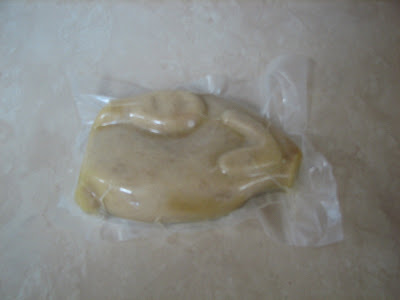
Second, I took a package of Veat vegetarian chicken breast from the freezer. It looks like this:


When I took it out of the package it looked like this:


I didn't really want to eat that. Doesn't look so good. But I thought maybe I could make it more appetizing by cooking it in a teriyaki sauce. For this purpose, I chose Trader Joe's Soyaki sauce. I cut the baby out of its little plastic package and cooked it on the stove in a small frying pan, turning it now and then to get it warm and covered with the sauce. When I could put a fork in it I took it out and sliced it. It looked like this:


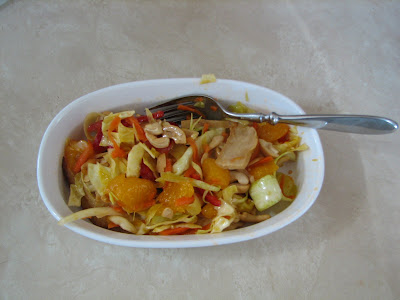
So that did help. At least aesthetically. I cut these slices into two pieces, bite-sized. Then I was ready to put it all together. Coleslaw, chicken, mandarin oranges, cashews. Here's what it looked like:


It looks okay, huh? Well, it was okay but it was far from great. In fact, I'd say maybe not ready for prime time. But it wasn't as bad as some of the reviewers of the original dish said. Comments on the original chicken salad, using a mayo coleslaw and real chicken, included these gems:

I thought this would make a quick and easy lunch but my husband just stared at me. I tried a couple of bites and threw the rest out. Nothing could save this dish.

terrible. I used a good cole slaw (Rudolph's) and it still turned out to be pretty disgusting. My husband absolutely hated the mandarin oranges in it.

Yucko!

I served this for lunch and my husband just laughed at me. He wouldn't even try it. I ate a bit but I have to admit it was a bad idea. The mayonnaise in the slaw just serves to slime everything else up and the taste isn't that great.

To be fair, not all of the comments were bad. But these are representative of those that were, and they seem to have some elements in common: husbands, for example.

I'm not recommending the vegan version as I made it. I wonder if one made with a vegan mayo might be better. Or another type of faux chicken. I'm open to suggestion!

Sunday, February 10, 2008

coleslaw


Coleslaw, according to wikipedia, is a salad consisting primarily, and minimally, of shredded, raw cabbage, although it often also includes shredded carrots. There are many variations of the recipe which include the addition of other ingredients, such as red cabbage, pineapple, or apple. It is usually mixed with a dressing which traditionally consists of, or is based on, vegetable oil and vinegar or a vinaigrette. In the U.S. coleslaw often contains mayonnaise (or its substitutes); although many regional variations exist, and recipes incorporating prepared mustard are also common. A variety of seasonings may be added. The dressing is usually allowed to settle on the blended ingredients for several hours before being served. The cabbage may come in finely minced pieces, shredded strips, or small squares. (see http://en.wikipedia.org/wiki/Coleslaw).

Coleslaw is also another reward for picking up that head of cabbage, an inexpensive and versatile vegetable.

Hats off for this recipe to Rebecca at vegan food:


Dressing:
1/3 c. oil
1/4 c. apple cider vinegar
3 T sugar (or brown rice syrup or apple juice concentrate)
2 t salt
2 t mustard seeds
1/2 t celery seed

Salad:
small cabbage, shredded
onion, thinly sliced
red bell pepper, thinly sliced
carrot, coarsely grated

Boil dressing ingredients for about a minute. Pour over salad ingredients. Mix. Let sit for a couple of hours. (I put it in the fridge.)

When I made this recipe I used the Mark Bittman method for the salad ingredients: I put the ingredients in a colandar, ground coarse salt over them, mixed it up. I let that sit for a couple of hours to drain the excess water from them. Because I had used salt in this step I didn't add any to the dressing.