Showing posts with label fresh vegetables. Show all posts

Saturday, July 25, 2009

Make a salad!


Mark Bittman, a non-vegan, offered 101 salads in a recent New York Times article. He started the list with the vegan salads. I copy them here for ease, and note that the original article can be found at the NYT website. I have removed what I consider gratuitous comments on non-vegan additions that Mark made. If you try some, let us know how you like them!

For fat-watchers (and yes, I'm one of them), I have starred those that call for no oil. Of course, many of the salads that call for a vinaigrette can be made with one that is fat-free.

MOSTLY VEGAN SALADS

1. Cube watermelon and combine with tomato chunks, basil and basic vinaigrette. You can substitute peach for the watermelon or the tomato (but not both, O.K.?).

2. Mix wedges of tomatoes and peaches, add slivers of red onion, a few red-pepper flakes and cilantro. Dress with olive oil and lime or lemon juice. Astonishing.

* 3. A nice cucumber salad: Slice cucumbers thin (if they’re fat and old, peel and seed them first), toss with red onions and salt, then let sit for 20 to 60 minutes. Rinse, dry, dress with cider vinegar mixed with Dijon mustard; no oil necessary.

4. Shave raw asparagus stalks with a vegetable peeler. Discard the tough first pass of the peeler — i.e., the peel — but do use the tips, whole. Dress with lemon vinaigrette and coarse salt.

5. Grate or very thinly slice Jerusalem artichokes; mix with pitted and chopped oil-cured olives, olive oil, lemon juice and a sprinkling of coarsely ground cumin. Unusual and wonderful.

6. Sichuan slaw: Toss bean sprouts, shredded carrots and celery, minced fresh chili, soy sauce, sesame oil and a bit of sugar. Top with chopped peanuts and chopped basil, mint and/or cilantro. (The full trio is best.)

7. Grate carrots, toast some sunflower seeds, and toss with blueberries, olive oil, lemon juice and plenty of black pepper. Sweet, sour, crunchy, soft.

* 8. Chop or slice radishes (or jicama, or the ever-surprising kohlrabi) and combine with chopped or sliced unripe (i.e., still crunchy) mango, lime juice and mint or cilantro.

* 9. Chop or slice jicama (or radishes or kohlrabi) and mango and mix with coconut milk, lime juice, curry powder and cilantro or mint.

10. Cook whole grape tomatoes in olive oil over high heat until they brown lightly, sprinkling with curry powder. Cool a bit, then toss with chopped arugula, loads of chopped mint and lime juice.

11. Chop and steam baby or grown-up bok choy until crisp-tender, then shock it in ice water. Drain, then toss with halved cherry tomatoes, capers, olive oil and lemon juice.

12. Combine sliced fennel and prune plums; serve with vinaigrette spiked with minced ginger. Nice pairing.

* 13. A red salad: Combine tomato wedges with halved strawberries, basil leaves, shaved vegan Parmesan and balsamic vinegar.

14. A classic Moroccan thing: Thinly slice carrots, or grate or shred them (the food processor makes quick work of this). Toss with toasted cumin seeds, olive oil, lemon juice and cilantro. Raisins are good in here, too. There is no better use of raw carrots.

15. Cut cherry or grape tomatoes in half; toss with soy sauce, a bit of dark sesame oil and basil or cilantro. I love this — the tomato juice-soy thing is incredible.

16. Slice fennel and crisp apple about the same thickness (your choice). Combine, then dress with mustardy vinaigrette and chopped parsley. Come fall, this will be even better.

17. With thanks to Szechuan Gourmet restaurant: Finely chop celery and mix with a roughly equal amount of pressed or smoked tofu, chopped. Dress with peanut oil warmed with chili flakes and Sichuan peppercorns, then mixed with soy sauce.

18. Roughly chop cooked or canned chickpeas (you can pulse them, carefully, in a food processor) and toss with olive oil, lemon juice, lots of chopped fresh parsley and mint, and a few chopped tomatoes. Call this chickpea tabbouleh.

19. Mix cooked cannellini or other white beans, chopped cherry or grape tomatoes and arugula or baby spinach. Lightly toast sliced garlic in olive oil with rosemary and red pepper flakes; cool slightly, add lemon zest or juice or both, then pour over beans.

20. Shred Napa cabbage and radishes. The dressing is roasted peanuts, lime juice, peanut or other oil, cilantro and fresh or dried chili, all whizzed in a blender. Deliciousness belies ease.

* 21. Dice cucumbers (if they’re fat and old, peel and seed them first) and toss with cubes of avocado, a little mirin, rice vinegar and soy sauce.

22. Thinly slice button mushrooms; toss with finely chopped carrots and celery and mix with mung bean sprouts. Finish with peanut or olive oil, sherry vinegar, a little soy sauce and minced ginger. (This is a super vinaigrette, by the way.)

* 23. Thinly slice some cucumbers (if they’re fat and old, peel and seed them first), red onions, radishes and fresh chili pepper. Soak for a few minutes in equal amounts vinegar and water, with some salt and sugar. When they taste lightly pickled, drain and serve, alone or over rice.

24. Blanch spinach, then drain and shock in ice water. Squeeze it dry, chop it and toss it with toasted pine nuts, raisins, olive oil and a tiny bit of balsamic vinegar. Capers are good, too. Quite elegant, actually.

* 25. Combine chopped bell peppers, tomatoes, red onion, chilies and cilantro, then toss with corn tortilla strips, toasted in a 350-degree oven until crisp (or yes, use packaged chips; why not?). Dust with chili powder and lots of lime juice.

26. Combine mushroom caps and thinly sliced red onions with olive oil; broil gently until tender and browned. Toss with a lot of chopped fresh parsley or basil (or both) and a simple vinaigrette. Some chopped escarole, arugula or watercress is good, too.

27. Cook whole, unpeeled eggplant in a dry, hot skillet or on a grill, turning occasionally, until completely collapsed and soft. Chop and toss with toasted pita, toasted pine nuts, cooked white beans and halved cherry tomatoes. Dress with olive oil, lemon juice and lots of black pepper. Or a vegan yogurt dressing is good, especially one laced with tahini.

28. Toss mâche or another soft green with toasted slivered almonds and roughly chopped fresh figs. Thin some almond butter with water and sherry vinegar to taste and use as a dressing.

29. Pit and halve cherries (or halve and pit cherries), then cook gently with olive oil and a little balsamic vinegar until they break down. Toss with chopped radicchio, endive, escarole or a combination, some toasted hazelnuts and more oil and vinegar, if necessary.

30. Fast, grown-up potato salad: Boil bite-size red potatoes. While still warm, dress them with olive oil, lemon juice, whole grain mustard, capers and parsley. Chopped shallots, bell peppers, etc., all welcome, too.

31. Roast beets whole (or buy them precooked), then slice or cube and toss with a little chopped garlic (or a lot of roasted garlic), toasted walnuts, orange juice and olive oil.

32. Same deal with the beets, but toss with cooked corn, arugula, olive oil, sherry vinegar and chopped shallots.

33. The real five-bean: Chickpeas, cannellini or other white beans, kidney or other red beans, steamed string beans and steamed yellow wax beans. Toss with vinaigrette, chopped scallions or red onion, and parsley.

34. Grill quartered romaine hearts, radicchio and/or endive. Drizzle with olive oil and sherry vinegar, and add dill and chopped shallots. Teeny-tiny croutons are great on this.

35. Combine cooked or canned black beans with shredded cabbage and this vinaigrette: olive oil, fresh orange juice, not much sherry vinegar, ground cumin.

36. Mix cooked or canned chickpeas with toasted coconut, shredded carrots, chopped celery, curry powder, olive oil, lime juice and cilantro.

----

Placing the vegan salads first gives them a role of importance in this article. A few years ago we would not have seen that.

Tuesday, June 23, 2009

Simple steamed veggies


The other day my meal was just this simple: steamed vegetables (right) and salad (left). I believe when there are many colors you've got it covered.

Sunday, June 21, 2009

Testing, testing...

I am trying out some recipes in a new cookbook: Vegan Soul Kitchen, by Bryant Terry. Today I tried the Succotash Soup, with Garlicky Cornbread Croutons. It's not a quick dish. I figure you should allow yourself two hours to be safe. It's a good recipe for those who are practicing their sidework skills (it's good to keep cleaning up after yourself as you go along, especially when there are several pans and bowls involved). It isn't a complex recipe and the ingredients are few, but there are enough steps that I felt very proud when I finished it.

The recipe calls for four fresh corn cobs, from which I cut off the corn and then cut the cobs in three parts. It also calls for 2 cups of lima beans, cooked in 10 cups of water until tender. When the beans are done, they are strained out of the broth and the cobs are then added to the bean broth. Thus:


While the cobs are cooking in the broth, giving up their flavor, diced onions (from one large onion) are sauteed until soft. In the cookbook they are sauteed in olive oil, but I used water.


Meanwhile the beans wait:


And the fresh corn waits:


The corn is added to the soft onions (1/3 c. of corn is reserved for later), and the mixture is cooked about five minutes longer, until corn is done:


When the broth is ready (it cooks 30 minutes), the corn cobs are removed and added to the compost pile if you have one (I don't, yet), and the corn and onion mix is added to the broth.


After it is cooked sufficiently (about ten minutes), it is blended in a blender and then strained through a sieve to get rid of the tough corn skins.


The sieving is easier than I expected. There was a bit less than a cup of fiber left in the sieve when I called it good.

The recipe calls for a topping of corn bread croutons that are toasted with a garlic-oil mixture as well as freshly roasted corn (done in the broiler). I actually prepared and served these parts, along with the chopped flat-leaf parsley.

The result:


It is so delicious! This recipe makes me want to make more from this cookbook. But honestly, it's the kind of recipe that I consider worth the price of the book.

Note: I tagged this post "McDougall" because with the water instead of oil the soup itself is cooked according to McDougall recommendations. The croutons and roasted corn were not.

A Corny Meal


Polenta with mushrooms and asparagus in marinara sauce

Easy meal to make, satisfying, flexible. Two methods:

Method one: the "hard" way:

For four servings:
Polenta:
1 c. polenta meal
4 c. water
1 tsp. salt

Make the polenta: Mix polenta in water, in a two-quart baking dish. Add salt, stir. Bake for fifty minutes at 350 degrees. Take out, stir, then replace in the oven for 10 - 20 minutes, until done. It will be thick and soft.

Corn and vegetable sauce:
4 ears corn
1/2 c. water
1/2 medium onion, chopped
4 oz. mushrooms, sliced
4 oz. asparagus, fresh, preferably thin
1 - 2 c. marinara sauce
A few leaves of fresh basil, chiffonade (roll up and slice thinly) (optional)
Italian seasoning to taste

While the polenta is cooking, prepare the vegatables. Take the husks off the corn and cut in half. Clean and slice mushrooms. Wash asparagus, cut off tough ends and discard, then cut spears into 1 - 2" long pieces. Chop onion. Slice basil leaves into thin strips.

Put a large pot of water on to boil. When the polenta is back in the oven for the second time, put the corn in the pan to cook until done. Test by spearing an ear - if liquid that comes out of a kernal is clear the corn is done.

When polenta is about 2/3 (about 40 minutes in) done, fix sauce. In a large frying pan heat water over medium heat. Add onion, cook for about a minute. Add mushrooms and steam-cook until nearly done (5 - 10 minutes). Add asparagus, marinara sauce, and seasoning. Cook until asparagus is crisp-tender.

[Alternatively, you can cook the polenta ahead and refrigerate. Cut into four pieces and reheat in the microwave]

To serve: Divide polenta onto the four plates. Divide sauce on top of the polenta. Serve corn on the side.

Method two: The easier way:

Polenta: Use tube from the store. For each serving cut two slices, each about 1/2" thick. Heat in microwave until warm.

Corn: use frozen ears. Cook four in microwave, according to package directions.

Sauce. Combine all ingredients except asparagus in wide microwave-safe dish with lid. Cook in microwave oven until nearly done (microwaves vary; start with three minutes and check). Add asparagus (you can use frozen spears if you like, or frozen cut asparagus) and cook until crisp-tender, another minute or so.

Assemble.

Warning: I did not try the microwave version. I relied on past experience with similar mixtures and with polenta from a tube package. If you try it let me know how it comes out.

Thursday, April 30, 2009

Just add color


Sometimes we are not having a complicated meal. I admit to fixing myself some dishes, like the above, that are as simple as they come. In this case, it is especially important to consider the color of the dish itself. The right color can make the dish taste better! I promise!


Incidentally, these vegetables are on the "okay" list of an elimination diet. An "elimination diet" is one that includes only those foods that are not likely to cause an allergic or sensitivity reaction. I am currently on one of these diets for a week - or more, depending on results - to discover if certain foods might be the culprits in the inflammation I experience (arthritis).

Dr. McDougall has a clear explanation of when you might want to try this method to sort out a long-term health issue. Take a look at this newsletter.

Monday, September 1, 2008

Get dressed quickly but carefully


I had lunch at a restaurant today. The salad was made of lettuce still glistening with water, along with shredded carrots and a few cucumber slices. The weak dressing was on the side. As I bit into this concoction it occurred to me that many people don't care for salads because this is what they think they are. Yet even in a restaurant, even with average cooks with little time, they can be much more.

"God is in the details", they say. I think cooking is in the details. Small details, just a matter of paying attention.

My mother first told me about salads. She told me to use a wooden salad bowl and olive oil, because olive oil does not get rancid, whereas other vegetable oils do. Actually, olive oil does go rancid. The various so-called experts seem to disagree on whether the use of olive oil to "season" a wooden salad bowl is good practice. I think the best bet is to use food-grade mineral oil for seasoning an unfinished bowl but go ahead and use olive oil in your salads. Do a quick wash and dry after eating up the salad and let the bowl air dry. Never put wooden bowls (or utensils) in the dishwasher.

My stepmother took me farther into the salad creation world, showing me how to create a classic dressing. She made this salad every day that I knew her and I doubt anyone eating it ever tired of it.

If you have a wooden bowl you can use this method for making a simple classic salad (scroll down farther for the quicker version, though; this is vegan convenient, after all):

Smash a clove of garlic with a large chef's knife (or with some kind of garlic crusher). Place it in the wooden salad bowl. Use a wooden spoon to smash it up more in there. Add salt - 1/2 to 1 tsp, more if you like - and use it as a grinder to grind the garlic more.

Add about a teaspoon or more of dry mustard, grind that together a bit, then pour in olive oil. The standard formula calls for three parts oil to one part vinegar; let your own taste be your guide (you can adjust later). So start with about 1/4 c extra virgin olive oil. Smash the garlic and mustard, salt, and oil around the bowl until it is an opaque blend. There can be bits of garlic lying around. If you want to take out some of those bits go ahead. Depends on your love of garlic.

Whisk in 1/8 c red wine vinegar, or less. Taste, add pepper, adjust seasonings.

To make the salad:

Use prewashed baby spinach, romaine, or other good quality greens. Iceberg lettuce is useless for nutrition and has no flavor. If these greens are wet for some reason dry them with a clean dish towel. This is one of those steps that really do matter. Wet salad greens do not a great salad make. Tear the greens into the bowl. Add any other ingredients you like, but if you use tomatoes or other similarly watery vegetables, remove the watery seeds first so you don't dilute the taste.

Take wooden salad forks and toss, coating the ingredients with the dressing from the bottom of the bowl.


QUICKER VERSION:

Put 1 clove garlic, 1 tsp dry mustard, 1/3 c red wine vinegar, 2/3 c extra-virgin olive oil, 1 tsp salt, 1/2 tsp pepper in blender. Blend until smooth. Taste and adjust seasonings.

Tear fresh dry greens into bowl. Add as much dressing as you prefer, and toss together. Serve.

Sunday, July 27, 2008

Wrap parties aren't just for movie makers


Consider having a wrap party after the next football game. Or protest. Or whatever. Or just offer the materials for lunch or dinner.

Displayed here are several ingredients that can be made into wraps: avocados, salsa, sliced bell peppers, sliced tomatoes, sliced baked tofu, hummus, vegan mayo, veggie pate, little greens, and soy chorizo.

The soy chorizo can be cooked up in a few minutes in a saute pan and can be hot or cold. You might like to add refried beans and offer the option of making hot burritos.

This type party lends itself well to a group event, where each person brings one or two ingredients.

To make it even more fun and enjoyable consider taping a list of suggested groupings on the wall near the ingredients. For example, note that these ingredients go well together: hummus, soy chorizo, sliced tomatoes, avocados. For a great list of possibilites with catchy names, take a look at Vegan Express, by Nava Atlas.

Oh, one more advantage: leftovers. These kinds of ingredients move readily into other dishes later.

Saturday, July 5, 2008

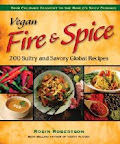
Vegan Fire and Spice: Just What the Tastebuds Ordered

Robin Robertson’s new cookbook, Vegan Fire and Spice, is garnering rave reviews from all over. And with good reason. The dishes are easy to make, use commonly-available fresh ingredients, and offer a splendid array of tastes.

Many of us who have been vegetarian or vegan for a while reach a point when we want to do more than order Indian take-out. We want to make Indian take-out. Not to mention African, Caribbean, South American, and more. We want to shake up our own kitchens by bringing in different techniques and flavors. This book promises to give us the means. The book is a reworking of Robertson’s Some Like it Hot, with all recipes veganized and 25 additional recipes added. It is also the first to be published by Robertson’s new enterprise, Vegan Heritage Press. I recently tested several of the recipes from different parts of the book and all were successful. Some made it to a coveted place on my sure-to-make-again list because they are simply too good.

The cookbook is divided into sections, each section a geographical region that is known for spicy and hot dishes. When you open to that section there is a list of recipes, categorized by “appetizers”, “soups”, and so on. The recipes, then, are not listed in their entirety in one place. The index is complete, however, so if you are looking for a specific recipe and don’t remember where it comes from you will find it there. It makes sense to look within a region for a menu of dishes rather than take a chance on mixing cultures, picking one from Italy and another from China, for example. For this reason I find the arrangement agreeable.

Each recipe is on its own page. No sharing. I prefer this standard, as it’s easier to find the recipe and to follow it.

There are no pictures, other than on the cover. I love pictures but I appreciate the economies of leaving them out. It adds to the adventure, too.

The recipes are easy to make. I admit to being an occasionally ambitious cook, happy at times to create complex dishes that take specialized skills. Most of the time, though, I prefer to put together meals quickly and easily and know they will turn out right even when some parts go wrong or I have to substitute some ingredients. Forgivable recipes, I call them, that’s what I look for.

From my experiments with Fire and Spice, I believe that’s what we have here: forgivable recipes. When I made the Senegalese soup (p. 119) the first time I got distracted and burned the mix of onions and celery. I didn’t want to start over so I scraped out the less-burned parts and dumped them in another pan and continued on. I suspect the soup would have been better if I’d had the full contingent of onion and celery and none of it was burned but it was nonetheless delicious. When I made the vegetable pakoras I didn’t chop the cauliflower enough, and I made the mistake of throwing in the cauliflower before I had the flour and water mixed. But I soldiered on and although the pakoras were not beautiful they were tasty indeed. Way too tasty, considering I made a full batch and there was only the one of me in the house.

Some of the mistakes I made came about because the recipes are not always as specific as they could be. One recipe calls for two Granny Smith Apples, another for a head of cauliflower, another for one or two yams or sweet potatoes. Not all of these recipes specify the size of these vegetables or an alternative measure, like weight or number of cups. In my experience some vegetables and fruits can vary dramatically in size. Sometimes the directions lack a little: the pakora recipe says to mix enough water into the flour mix to “make a batter”. But how thick?

And sometimes the timing is off. When I made the Chickpea and Green Bean Curry (p. 158) I had to make my dinner guest wait because it took much longer for the green beans to cook than estimated. My beans were fresh and cut according to directions and I think they were typical of what you would find in a grocery vegetable section, so I’d suspect my experience would be typical. Most of the time I did find the time estimates within the recipes to be accurate, however. What I would have appreciated, though, would have been estimates of time to make the entire dish.

Minor gripes. Most of the recipes do list ingredients by weight or cups and most of the directions are clear and unmistakable in intent.

The recipes call for fresh vegetables and fruits most of the time. Occasionally they require canned diced tomatoes or canned beans, but most of the ingredients are fresh, as they would be in their native countries. This means you do need to do a little preparation. The good news is that most of this preparation can be done ahead of time, as it would be in a restaurant if you were the sous chef (according to Wikipedia the more correct term may be commis chef, one who prepares vegetables unaided). The better news is that this is basic prep, nothing fancy, nothing beyond you.

Should you be new to kitchen equipment or preparation, though, there is a helpful section at the beginning of the book that tells you all you will need to know. There is also a section on the nature of spices, chiles, and other “exotic” ingredients. I inserted the quotation marks because seitan is about as exotic as they get here, meaning you should be able to find most of the ingredients, or reasonable substitutions, in any well-stocked grocery store, and the few remaining can be obtained at a natural foods store or even online.

Using fresh ingredients means the dishes will taste as good as they should. It’s worth using the freshest you can find because you’ll notice the difference.

Even though I see this book as the guide to an adventure the seasoned vegan is going to want to take, a brand new vegan cook can confidently prepare these delicious dishes and be proud.


Monday, June 16, 2008

Easy roasted vegetables

left: unbaked vegetables ready to go into oven


One type of convenient product I have come to love is the spice or herb blend. I have a "greek seasoning" blend and a "creole seasoning" blend that can be used on almost anything. One example is this easy roasted veggie dish. These are general directions because the dish will vary with what you have on hand, what you like, how much you want to make.

Use fresh vegetables from your refrigerator. Or you could use the stew-type frozen vegetable mixes available in grocery markets for an even easier version. Root vegetables, like potatoes and turnips and onions, make fine roasting fodder. Bell peppers of any color, leeks, squash, all are good. The cruciferous vegetables, like cabbage and broccoli, may not fare as well but could work if the dish is covered long enough to get them steamed. Corn could make a great addition (frozen or fresh).

Estimate how many veggies you'll need based on how many will be eating and how big a pan you'll be using. You'll want the veggies to make a layer that is not too thick so they will all cook evenly. Wash and cut the vegetables into bite-size chunks. Leave skins on potatoes.

left: roasted vegetables ready to eat


Pile the vegetables into a shallow roasting dish or casserole. Sprinkle a couple of tablespoons (or more, depending on how many there are, you want a very light coating) of olive oil on top, and a generous amount of greek seasoning mix on top of that (or try another seasoning mix that goes well with vegetables, like Italian). Mix lightly and cover the pan (with a lid or with foil). Bake at 350 degrees for 30-45 minutes, stirring two or three times. Remove lid or foil and let cook 5 - 10 minutes uncovered.

Friday, January 25, 2008

A simple cabbage salad

I admit openly: I stole this from Mark Bittman. The recipe. He made a video showing how to make this salad, which I watched, and then I made the salad that you see here. Mark Bittman is a video columnist for the New York Times, his vlog (?) is called The Minimalist. A good name, and when I saw the headline - "shredded cabbage" - I thought I might simply link to the video here. Unfortunately, The Minimalist titles feature pictures of animal products being made into food, including sea animals, so I figured it wasn't really appropriate for this blog. BUT the cabbage recipe? Perfect.

Warning: it actually takes a bit over two hours to make this. So don't drag out the head of cabbage right before dinner.

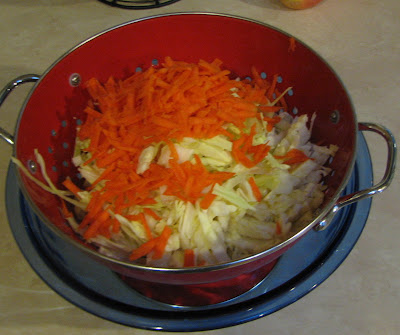
Shred cabbage into a colander. Any kind of cabbage, any way of shredding. I simply sliced it thinly, then quick-chopped those "slices". Took a minute maybe. Add in other hard veggies like carrots if you like.


Sprinkle about three tablespoons of coarse salt on the mix and toss it together.


Let it sit for about two hours, draining into the colander. After two hours, squeeze the mix to let go of additional water.


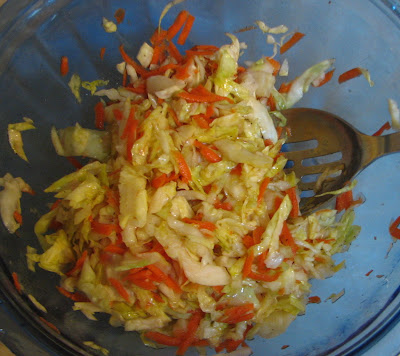
The mix has shrunk a good bit by now. Put the mix into a bowl. Add some pepper (freshly ground, of course), sprinkle with a bit of olive oil, follow with a light (sherry or rice, for example) vinegar, toss together. And that's it.


This would go well with a veggie burger or other sandwich or some soup and bread. Or any time you just need a little crunch.

Wednesday, December 5, 2007

Hash!

picture of hash

So you decided to cook the other day? Or you went out to dinner and couldn't finish? So there are bits and pieces of leftovers in the fridge? And maybe you are a little leftover-phobic? Hash might be the solution. Hash can be made with a wide variety of leftovers, combined with a few fresh ingredients if you like.

Hash usually contains potatoes so if your leftovers don't include any you might want to zap one in the microwave. Hash usually contains some sort of protein thing, too, and bits of whatever else might go with it. My general method is:

Heat a tablespoon or so of oil in a frying pan. Chop up a bit of onion, toss it in. The onion usually goes first, if you are going to use it, because it needs the chance to soften up. Add any other fresh veggie type ingredient, like bell pepper, and any fresh protein thing, like the fresh mock sausage (gimme lean is one type) so these things can cook a bit and even get a little crispy, then the chopped cooked potato. Turn the heat up a little to crisp it up (I think hash should have some crispness to it), then it's nice to add a bit of spinach or other bright green leafy veg (I use frozen). Sprinkle with some paprika or red pepper (depending on your heatness tolerance and what's in the hash) and some parsley and pepper, and that's it. At the table you can give it a shake of salt if you like.

The hash pictured has onions, leftover half baked potato, leftover cooked portabello mushroom, a bit of fresh gimme lean sausage, 1/4 red bell pepper, a bit of firm tofu, sliced, and a sprinkling of spinach. It tasted great!
Posted by Picasa

Saturday, November 24, 2007

A vegan thanksgiving

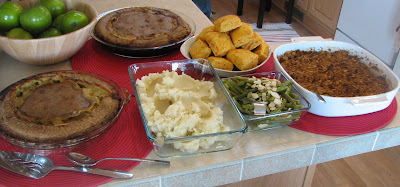
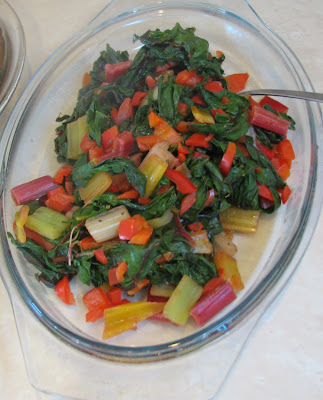
We cooked a simple vegan thanksgiving this year and everyone liked it. Our menu came primarily from the Farm Sanctuary's handout, which you can download. We eliminated a few of the items on the menu and added one from another site. In addition, we added a simple dish of rainbow chard with red bell pepper, because the market had bunches of fresh colorful chard and we couldn't resist.

The meal:


clockwise from left: vegan sausage pot pie, another pot pie, sweet potato biscuits, apple streusel, green beans with ginger and almonds, garlic mashed potatoes

and


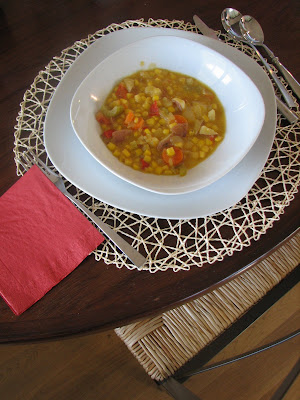
Corn chowder

and

rainbow chard, sauteed lightly with red peppers in olive oil

and


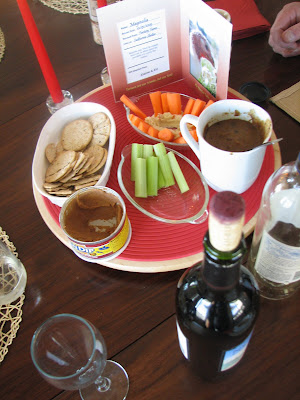
vegetables, crackers, dip, plus a cup of mushroom gravy.

The recipes for everything except the pot pie and chard are on the handout linked above. The pot pie recipe is from vegcooking.com. We substituted vegan Italian sausage for the vegan chicken in the pot pie. We also used frozen whole wheat crusts - which we had to modify to accommodate the large amount of filling.

We found that the pictures on the Farm Sanctuary handout didn't all look the way they actually should. All of the dishes are easy to prepare and require no special skills. There were no duds in the menu and I intend to cook several of these recipes again. I can hardly wait, in fact.

Tuesday, November 13, 2007

Veggie Bake


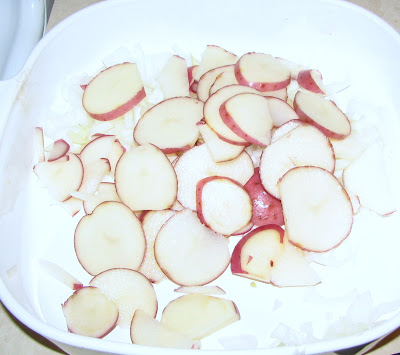
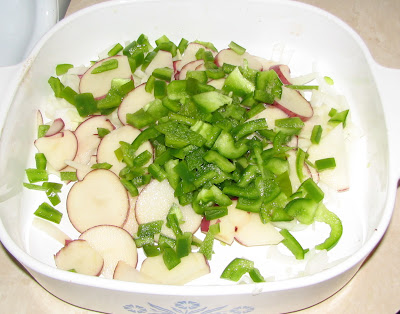
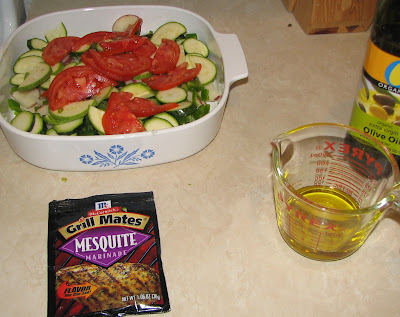
Those marinade mixes can be used to make a flavorful baked dish. Choose compatible fresh veggies. Here I grabbed red potatoes, summer squash, onion, bell pepper, and a tomato. Later I added some olive oil. Here's how I put it together:

Slice the onions, throw them in a casserole that allows them to spread out a bit. Slice up the potatoes and add them to the pile.


Cut up the squash and bell pepper, toss on top,


then slice the tomato and layer it last.


Mix about a quarter-cup of olive oil (or less) with the marinade mix. Pour it over all. Stir a bit to mix.

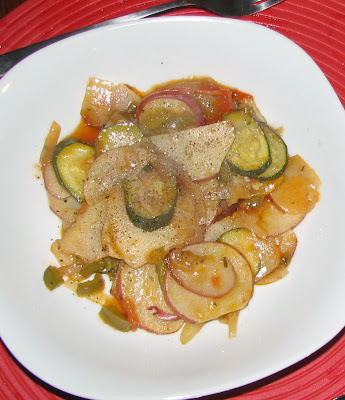
Cover the casserole and place in a 400 degree oven for 30-45 minutes, opening to stir two or three times. When it appears that the veggies are pretty much done, take the cover off and let the mixture steam off some of the liquid.

Serve on plates - two to four - and sprinkle with salt and pepper to taste.


Notes: I found the marinade a bit spicy. You may want to use less of it or more veggies. I also believe the mixture would do well with less oil, maybe 1/8 cup. If you don't have fresh veggies or are in more of a hurry, this dish would work with frozen vegetable mixtures quite well. Dump in one of those bags of potato mixtures, add the marinade-oil mix, throw in the oven.