Showing posts with label cookbooks. Show all posts

Tuesday, August 18, 2009

A cool soup for a hot summer day


The other day I turned to my trusty Vegan Express Cookbook for inspiration. I chose the Curried Cashew and Green Pea Soup because it sounded just right for a summer evening. I was right. It as sophisticated, cool, delicious. Here's the recipe:
-------------
Curried Cashew and Green Pea Soup (from Vegan Express)
2 cups rice milk
1/2 cup cashew butter
1 12.3-oz package firm silken tofu
1 - 2 tsps good-qaulity curry powder
1/2 tsp minced fresh or jarred ginger
1/2 tsp dried dill
1 medium tomato, diced
3 cups frozen green peas, steamed
1-2 scallions, green parts only, minced
1/4 cup minced fresh cilantro
2 tbs lime juice
salt and freshly ground pepper to taste

Combine 1/2 c of the rice milk with the cashew butter and tofu in a food processor. Process until smoothly pureed.

To serve at room temperature, transfer the puree to a serving container, then stir in the rest of the rice milk and the remaining ingredients. Check the seasoning, then serve. To serve chilled, refrigerate the soup for an hour or so. (Serving chilled means you can prepare ahead, have it ready when you are)

To serve warm, transfer the puree to a small soup pot. Add the rest of the rice milk and the remaining ingredients, stir together, and heat until just warmed through. Adjust the consistency with a little more rice milk if needed. Check the seasoning and serve.
---------
I served the soup with a side of cauliflower and carrot salad, also from the same cookbook.

This cookbook has become one of my favorites. Good food, interesting and fun, and easy and fast to make.

Friday, July 24, 2009

Viva la soul! Review of Vegan Soul Kitchen

soulkitchen

Bryant Terry's new cookbook, Vegan Soul Kitchen, takes "soul" seriously. Instead of focusing on traditional soul foods and simply replacing the animal products, Terry tries to define what the soul in soul food really represents. It's as much a book about a culture as it is about food. But that doesn't mean it is filled with dense gray pages of type. It also doesn't mean Terry is preaching or trying to convert anyone.

Why do I mention this book in this blog? Because many of these recipes are absurdly easy to make, and the others, while they may require a few pots and bowls and a little time, go together easily. Also because the cookbook includes directions for making several home-made condiments, which can enhance your convenience food!

Baked sweet potato fries

When I first opened this book I was confused. The book is not divided in the usual sections: appetizers, main dishes, side dishes, dessert, breads, blah blah blah. Instead it is divided into sections that are important to those southerners who swear by soul food. That means we get a whole chapter on watermelon. And drinks. And condiments. Along with the expected (but differently categorized) chapters on vegetable side dishes, grain dishes, protein dishes, desserts and other sweet things.

The whole of it adds up to a focus on the lighter parts of the meal. It's a great book for parties, right out of the box. It's also a good book for home-made staples. You can create a light corn broth, a zinging cajun-creole seasoning mix, pickles and ketchup and salsa and chutney and more. Terry is also interested in keeping his meals healthy, so you'll find little emphasis on fat and lots of emphasis on fresh.

cajun-creole spice mix

In other words, this book is more for the edges than the center. You will find red beans and rice and you will find "not-so-dirty rice" and hoppin' john, yes. There are many main dish recipes. But the bulk of the book is in the seasoning, the introduction, the end of the meal. Not to mention the melody.

Every recipe is prefaced by the name and performers of a piece of recorded music. The cookbook itself begins with the score for "Blessing" by Donald Bryant. After the song we are usually treated to a little bit about the food, where it's from, memories, some hint of how it came to be.

Some nuts and bolts:

* Every recipe starts on a new page, at the top.

* There is a section on equipment at the beginning.

* There are color photos sprinkled through it.

* Although some of the recipes take several steps, none require the skill of a kitchen magician. You can make these.


corn broth on its way to becoming succotash soup

I tested several recipes and enjoyed them all. When I made Succotash Soup with Garlicky Croutons I told my daughters that this one recipe was worth the price of the book. I am now using the cajun-creole spice mix that I created from the chapter on condiments, and I know I don't have to settle for anything commercial again.

straining the succotash soup. easier than I thought.

File under "entertainment", "basics", "staples", and "VEGAN".

crossposted at Vegan Soapbox

Sunday, June 21, 2009

Testing, testing...

I am trying out some recipes in a new cookbook: Vegan Soul Kitchen, by Bryant Terry. Today I tried the Succotash Soup, with Garlicky Cornbread Croutons. It's not a quick dish. I figure you should allow yourself two hours to be safe. It's a good recipe for those who are practicing their sidework skills (it's good to keep cleaning up after yourself as you go along, especially when there are several pans and bowls involved). It isn't a complex recipe and the ingredients are few, but there are enough steps that I felt very proud when I finished it.

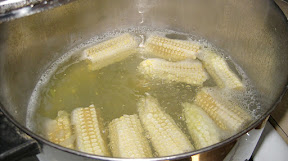
The recipe calls for four fresh corn cobs, from which I cut off the corn and then cut the cobs in three parts. It also calls for 2 cups of lima beans, cooked in 10 cups of water until tender. When the beans are done, they are strained out of the broth and the cobs are then added to the bean broth. Thus:


While the cobs are cooking in the broth, giving up their flavor, diced onions (from one large onion) are sauteed until soft. In the cookbook they are sauteed in olive oil, but I used water.


Meanwhile the beans wait:


And the fresh corn waits:


The corn is added to the soft onions (1/3 c. of corn is reserved for later), and the mixture is cooked about five minutes longer, until corn is done:


When the broth is ready (it cooks 30 minutes), the corn cobs are removed and added to the compost pile if you have one (I don't, yet), and the corn and onion mix is added to the broth.


After it is cooked sufficiently (about ten minutes), it is blended in a blender and then strained through a sieve to get rid of the tough corn skins.


The sieving is easier than I expected. There was a bit less than a cup of fiber left in the sieve when I called it good.

The recipe calls for a topping of corn bread croutons that are toasted with a garlic-oil mixture as well as freshly roasted corn (done in the broiler). I actually prepared and served these parts, along with the chopped flat-leaf parsley.

The result:


It is so delicious! This recipe makes me want to make more from this cookbook. But honestly, it's the kind of recipe that I consider worth the price of the book.

Note: I tagged this post "McDougall" because with the water instead of oil the soup itself is cooked according to McDougall recommendations. The croutons and roasted corn were not.

Sunday, June 7, 2009

PETA's Vegan College Cookbook


Check out PETA's Vegan College Cookbook
at peta2.com
.

I just took a look at PETA's Vegan College Cookbook at the bookstore. I was surprised at how simple the recipes are. It's full of really convenient vegan recipes. They are super-easy.

And none of the recipes require a stove!

Saturday, March 7, 2009

Convenience Store Challenge Take 2

Well, friends, there was no winner of the first convenience store challenge. But we're doing it again!

Same rules:

* Take ten bucks into a convenience store
* Find vegan food
* Put together a meal for one or more using just that food, plus you can add water, dried spices and herbs, nutritional yeast. It must be a meal, not a snack.
* Post about it here or here.

If you go to that link above, you'll see some examples of convenience store meals I made myself. It CAN be done. It won't likely be super-healthy but it can be a real meal.

Deadline: March 31, 2009

Winner gets to choose a cookbook from the vegan soapbox store!

Sunday, July 27, 2008

Wrap parties aren't just for movie makers


Consider having a wrap party after the next football game. Or protest. Or whatever. Or just offer the materials for lunch or dinner.

Displayed here are several ingredients that can be made into wraps: avocados, salsa, sliced bell peppers, sliced tomatoes, sliced baked tofu, hummus, vegan mayo, veggie pate, little greens, and soy chorizo.

The soy chorizo can be cooked up in a few minutes in a saute pan and can be hot or cold. You might like to add refried beans and offer the option of making hot burritos.

This type party lends itself well to a group event, where each person brings one or two ingredients.

To make it even more fun and enjoyable consider taping a list of suggested groupings on the wall near the ingredients. For example, note that these ingredients go well together: hummus, soy chorizo, sliced tomatoes, avocados. For a great list of possibilites with catchy names, take a look at Vegan Express, by Nava Atlas.

Oh, one more advantage: leftovers. These kinds of ingredients move readily into other dishes later.

Saturday, July 5, 2008

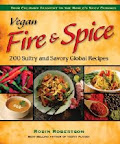
Vegan Fire and Spice: Just What the Tastebuds Ordered

Robin Robertson’s new cookbook, Vegan Fire and Spice, is garnering rave reviews from all over. And with good reason. The dishes are easy to make, use commonly-available fresh ingredients, and offer a splendid array of tastes.

Many of us who have been vegetarian or vegan for a while reach a point when we want to do more than order Indian take-out. We want to make Indian take-out. Not to mention African, Caribbean, South American, and more. We want to shake up our own kitchens by bringing in different techniques and flavors. This book promises to give us the means. The book is a reworking of Robertson’s Some Like it Hot, with all recipes veganized and 25 additional recipes added. It is also the first to be published by Robertson’s new enterprise, Vegan Heritage Press. I recently tested several of the recipes from different parts of the book and all were successful. Some made it to a coveted place on my sure-to-make-again list because they are simply too good.

The cookbook is divided into sections, each section a geographical region that is known for spicy and hot dishes. When you open to that section there is a list of recipes, categorized by “appetizers”, “soups”, and so on. The recipes, then, are not listed in their entirety in one place. The index is complete, however, so if you are looking for a specific recipe and don’t remember where it comes from you will find it there. It makes sense to look within a region for a menu of dishes rather than take a chance on mixing cultures, picking one from Italy and another from China, for example. For this reason I find the arrangement agreeable.

Each recipe is on its own page. No sharing. I prefer this standard, as it’s easier to find the recipe and to follow it.

There are no pictures, other than on the cover. I love pictures but I appreciate the economies of leaving them out. It adds to the adventure, too.

The recipes are easy to make. I admit to being an occasionally ambitious cook, happy at times to create complex dishes that take specialized skills. Most of the time, though, I prefer to put together meals quickly and easily and know they will turn out right even when some parts go wrong or I have to substitute some ingredients. Forgivable recipes, I call them, that’s what I look for.

From my experiments with Fire and Spice, I believe that’s what we have here: forgivable recipes. When I made the Senegalese soup (p. 119) the first time I got distracted and burned the mix of onions and celery. I didn’t want to start over so I scraped out the less-burned parts and dumped them in another pan and continued on. I suspect the soup would have been better if I’d had the full contingent of onion and celery and none of it was burned but it was nonetheless delicious. When I made the vegetable pakoras I didn’t chop the cauliflower enough, and I made the mistake of throwing in the cauliflower before I had the flour and water mixed. But I soldiered on and although the pakoras were not beautiful they were tasty indeed. Way too tasty, considering I made a full batch and there was only the one of me in the house.

Some of the mistakes I made came about because the recipes are not always as specific as they could be. One recipe calls for two Granny Smith Apples, another for a head of cauliflower, another for one or two yams or sweet potatoes. Not all of these recipes specify the size of these vegetables or an alternative measure, like weight or number of cups. In my experience some vegetables and fruits can vary dramatically in size. Sometimes the directions lack a little: the pakora recipe says to mix enough water into the flour mix to “make a batter”. But how thick?

And sometimes the timing is off. When I made the Chickpea and Green Bean Curry (p. 158) I had to make my dinner guest wait because it took much longer for the green beans to cook than estimated. My beans were fresh and cut according to directions and I think they were typical of what you would find in a grocery vegetable section, so I’d suspect my experience would be typical. Most of the time I did find the time estimates within the recipes to be accurate, however. What I would have appreciated, though, would have been estimates of time to make the entire dish.

Minor gripes. Most of the recipes do list ingredients by weight or cups and most of the directions are clear and unmistakable in intent.

The recipes call for fresh vegetables and fruits most of the time. Occasionally they require canned diced tomatoes or canned beans, but most of the ingredients are fresh, as they would be in their native countries. This means you do need to do a little preparation. The good news is that most of this preparation can be done ahead of time, as it would be in a restaurant if you were the sous chef (according to Wikipedia the more correct term may be commis chef, one who prepares vegetables unaided). The better news is that this is basic prep, nothing fancy, nothing beyond you.

Should you be new to kitchen equipment or preparation, though, there is a helpful section at the beginning of the book that tells you all you will need to know. There is also a section on the nature of spices, chiles, and other “exotic” ingredients. I inserted the quotation marks because seitan is about as exotic as they get here, meaning you should be able to find most of the ingredients, or reasonable substitutions, in any well-stocked grocery store, and the few remaining can be obtained at a natural foods store or even online.

Using fresh ingredients means the dishes will taste as good as they should. It’s worth using the freshest you can find because you’ll notice the difference.

Even though I see this book as the guide to an adventure the seasoned vegan is going to want to take, a brand new vegan cook can confidently prepare these delicious dishes and be proud.


Wednesday, May 7, 2008

Convenient Vegan Cookbooks


It can be difficult being vegan. Especially when you're a new vegan and you don't know all the "ins and outs" of vegan shopping and cooking. Sometimes you can feel like being vegan is so hard that you might just think about dropping your new vegan habit.

STOP.

Please don't give up on veganism. Giving up on being vegan is giving up on yourself. You're not giving yourself enough credit. You CAN do this! You can!

Here is a list of some cookbooks that can help. These books make vegan cooking simple, easy, convenient, and cheap:

Specifically about vegan convenience and ease:
Specifically for quick vegan meals:
Specifically for cheap vegan meals:
Specifically for single vegans:

And here are some great beginner books for the newly vegan:

Friday, April 4, 2008

Win the "Vegan Express" Cookbook!

Win a vegan cookbook at Vegan Soapbox!

Vegan Soapbox is giving away a vegan cookbook and one of the options is Vegan Express, a cookbook practically designed for readers of Vegan Convenient.

Head on over there and enter the contest if you'd like to win a free vegan cookbook!

Click here to win a vegan cookbook at Vegan Soapbox!

Monday, January 21, 2008

Quick meals from books


There are different ways to get food on the table quickly and easily. One way is to use convenience food, one focus of this blog. A good cookbook for this approach is Conveniently Vegan (see link at right). This book offers many meals that require only a few easily-found ingredients, many of which can be from the cupboard or freezer.

Another approach, also frequently used in this blog, is to put together fresh ingredients or foods that you have made yourself previously when you had a few minutes. A cookbook that uses this approach is 20 Minutes to Dinner (see also the link on the right, just added today). This book is aimed more at people who like to cook, at least some of the time. It offers directions to cook or prepare many "components" of dishes, like dried beans or "breast of tofu" or vegetarian "sausage", so that you have, in essence, your own "convenience foods". Throughout the book are some lovely alternatives to everyday items that you can usually throw together very quickly, too - like the banana milk I made today to put on my cereal (banana, cold water, vanilla and a blender). Obviously, the advantage to making your own is that you know exactly what is in it. These foods may also save money.


20 Minutes also offers a food prep and nutrition chapter, with information on what equipment you need (very little) and on getting the most nutritional bang for the buck.

Some folks have posted complaints on amazon.com that it often takes longer than 20 minutes to get dinner on the table, using this book. From what I have sampled and read, I'd say this is probably true. However, the more skilled you are with your equipment the sooner you will get that meal out there. It's probably a good idea to assume it will take a half-hour most of the time, and sometimes you'll be pleasantly surprised.